- NextMetropolis
- Posts
- Korea’s Largest Ever Urban Development, Archer’s Air Taxi Network Buildout, Jordan’s 25-Year City Plan, Abolishing Parking Mandates
Korea’s Largest Ever Urban Development, Archer’s Air Taxi Network Buildout, Jordan’s 25-Year City Plan, Abolishing Parking Mandates

Editorial Staff
December 08, 2025


Explore our latest coverage of the transformative projects and trends shaping our urban future.
You Should Know
Jakarta has become the world’s most populous city, surpassing Tokyo and Dhaka with nearly 42 million residents, according to the U.N. Dhaka will become the largest city by 2050 as urban populations continue to surge worldwide.
Iran’s capital, Tehran, is facing an unprecedented water crisis, just weeks or months from “Day Zero,” when the city’s regular water supply effectively runs out. With reservoirs nearly empty, officials warn of imminent rationing or even temporary evacuations. Similar extreme water stress is unfolding in other major cities, including Cairo and Mexico City.
U.S. urban rail networks are seeing a ridership surge, primarily fueled by the return-to-office push. D.C.’s Metro saw a 9% increase in ridership compared to the last fiscal year. NYC’s subway hit post-pandemic ridership records last week. In October, San Francisco’s BART and Boston’s MBTA saw their strongest ridership numbers since COVID.

Worth Watching
Inside Virginia's data center suburbs.
The $8B plan to make the ‘World's Best Airport’ even bigger.
The world’s thinnest skyscraper that became New York’s loneliest tower.

Top Stories

Korea Reboots Its Largest Development in Modern History
South Korea’s largest development project since the founding of the country has finally broken ground. The long-delayed Yongsan International Business District (YIBD)—a $38 billion mixed-use “vertical city” in the heart of Seoul—has entered construction after more than a decade of uncertainty.
The restart follows a 12-year standstill triggered by the collapse of the previous private financing structure in 2013, marking one of the most dramatic relaunches in modern Korean urban development.
YIBD’s vision centers on transforming a 456,000–460,000-square-meter former railway maintenance site—72% owned by KORAIL—into a compact, walkable district where business, housing, culture, education, and mobility systems are integrated within close range.
The masterplan divides the district into three zones: an International Business Zone anchored by a 100-story tower, one of Seoul’s most ambitious skyscrapers ever approved; a Business Complex Zone combining offices, retail, and logistics; and a Business Support Zone providing residential, medical, and educational facilities. Officials expect roadwork and site preparation to be completed by 2028, with global headquarters and the first residents arriving from 2030.
A key feature of the district is its advanced mobility system, built around a three-dimensional transportation network that stacks walkable ground-level streets atop underground autonomous shuttles and dedicated personal-mobility lanes.
The plan also commits to significant green connectivity, targeting 20% parks and 30% open green areas, with the remainder delivered through rooftop, terrace, and façade greening. These spaces will link directly to Yongsan Park and the Han River, creating one of the most interconnected urban green systems in Seoul.
The earlier Yongsan project collapsed after its heavily leveraged private finance vehicle (PFV) unraveled in the aftermath of the 2008 financial crisis, prompting investor withdrawal and eventual bankruptcy. The reboot fundamentally restructures risk: KORAIL and SH now finance and build the core infrastructure, then sell development parcels to private builders. Clearer land ownership and streamlined approvals are designed to prevent a single point of failure from imperiling the entire district.
The city is also reviewing opportunities to expand housing within the district, with potential sales beginning as early as 2027, though total supply will likely remain below the ruling party’s proposal for 20,000 units.
With construction finally underway, YIBD is positioned to become a central component of Seoul’s future housing, business, and mobility strategies—directly supporting the city’s 2040 plan and reshaping Yongsan, the geographic heart of Seoul, into a world-class international business district.

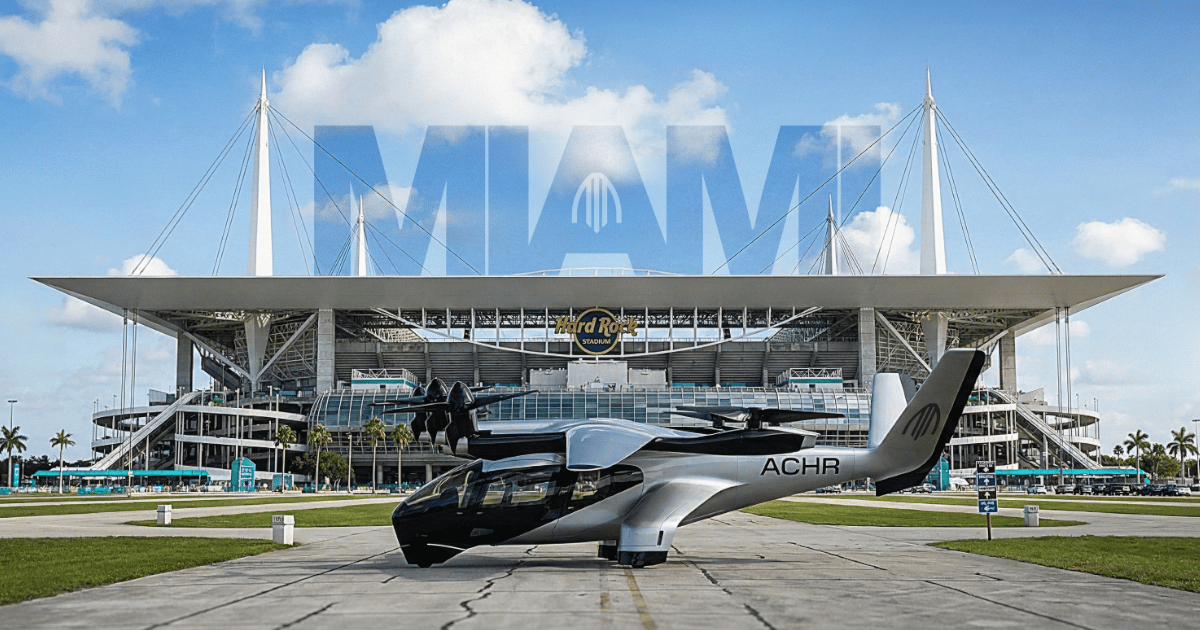
Archer Moves Fast to Build Urban Air Taxi Networks
Archer is accelerating plans to build air-taxi networks across major U.S. cities, and its newest Miami blueprint shows how quickly the company is moving from concept to real urban mobility systems.
The aim is to link major population and business hubs with 10- to 20-minute electric flights that bypass gridlock and introduce fast, lower-noise transportation across one of the country’s fastest-growing regions.
Archer’s ability to advance these networks comes from its eVTOL technology, centered on the piloted Midnight aircraft. Midnight carries four passengers, performs rapid back-to-back trips with minimal charge time, and replaces 20-50 mile (32–80 km) car commutes with short electric flights. Able to travel at speeds of up to 150 mph (241 km/h), the aircraft uses 12 propellers to improve redundancy and safety while reducing noise. I
n Miami, Archer plans to connect Miami, Fort Lauderdale, Boca Raton, and West Palm Beach, along with three major airports: MIA, FLL, and PBI. Related Ross will partner with Archer to develop a vertiport in its downtown West Palm Beach project. Hard Rock Stadium and Apogee Golf Club will integrate into the system by readying their existing helipads for electric operations.
Archer is also eyeing New York City, where its partnership with United Airlines outlines nine planned vertiport locations, including the Downtown Manhattan Heliport, the West 30th Street and East 34th Street heliports, and three major airports: JFK, LGA, and EWR. United customers will eventually be able to book these short 5- to 15-minute hops as part of their itineraries.
In Los Angeles, Archer is investing $126 million to take over Hawthorne Airport, positioning it as a long-term hub for eVTOL testing, operations, and AI-driven aviation technology. The company views L.A. as a cornerstone market, supported by partnerships with the Los Angeles Sports & Entertainment Commission and planned services tied to the 2028 Olympics and 2026 World Cup.
Despite Archer’s progress building out its networks, much work remains. The company must retrofit numerous helipads, build new vertiports, and integrate them into busy airport environments. Introducing large numbers of eVTOLs into congested urban airspace will also require upgraded air-traffic systems and additional FAA staffing—both current constraints. Midnight is also not yet FAA-certified for commercial passenger operations.

Jordan’s 25-Year Plan for a New City
Jordan is advancing one of the Middle East’s most far-reaching urban initiatives with the launch of Amra City, a completely new city intended to reshape the country’s long-term growth trajectory over the next 25 years.
Unlike many new cities positioned as futuristic showcases, Amra City is fundamentally a population-management tool created to relieve mounting pressure on Amman and Zarqa, whose combined population is projected to reach 11 million within 25 years. Rather than competing with existing cities, it acts as a planned release valve: a functional, sustainable, economically grounded urban extension built to absorb growth before it turns into a crisis.
A defining advantage of Amra City is its land structure. The entire site—nearly 500,000 dunums (500 million square meters, or roughly the geographic size of Phoenix, AZ) of state-owned land—gives the government complete planning control, eliminates land-acquisition risks, and allows the city to be built in sequenced phases over 25 years. This unified ownership model avoids the fragmented landholdings that often derail global megaprojects.
Phase One covers roughly 40 million square meters, with construction beginning in early 2026 and concluding in 2029. It introduces key economic, cultural, and civic anchors. An international exhibition and conference center will open in 2027, followed by an integrated sports city with an international football stadium planned for 2029 and Olympic-standard arenas.
The phase also includes a motor-racing track, a major entertainment city expected in 2028, a one-million-square-meter environmental park, commercial and service districts, an educational city, a technology hub, and expanded cultural facilities such as an extension of the Royal Automobile Museum.
Amra City will also introduce Jordan’s first unified utility bill covering water, electricity, and gas. The government is studying both fast and slow railway connections, and the Bus Rapid Transit system is scheduled to reach the city by the end of Phase One in 2029.
The Jordanian Company for the Development of Cities and Governmental Facilities will oversee implementation, while the Jordan Investment Fund owns the land and established the development company. With the government as the primary developer and private-sector partners supporting diversified financing, Amra City represents a major evolution in Jordan’s approach to sustainable, long-term urban planning.

Cities Push to Abolish Mandatory Parking Rules
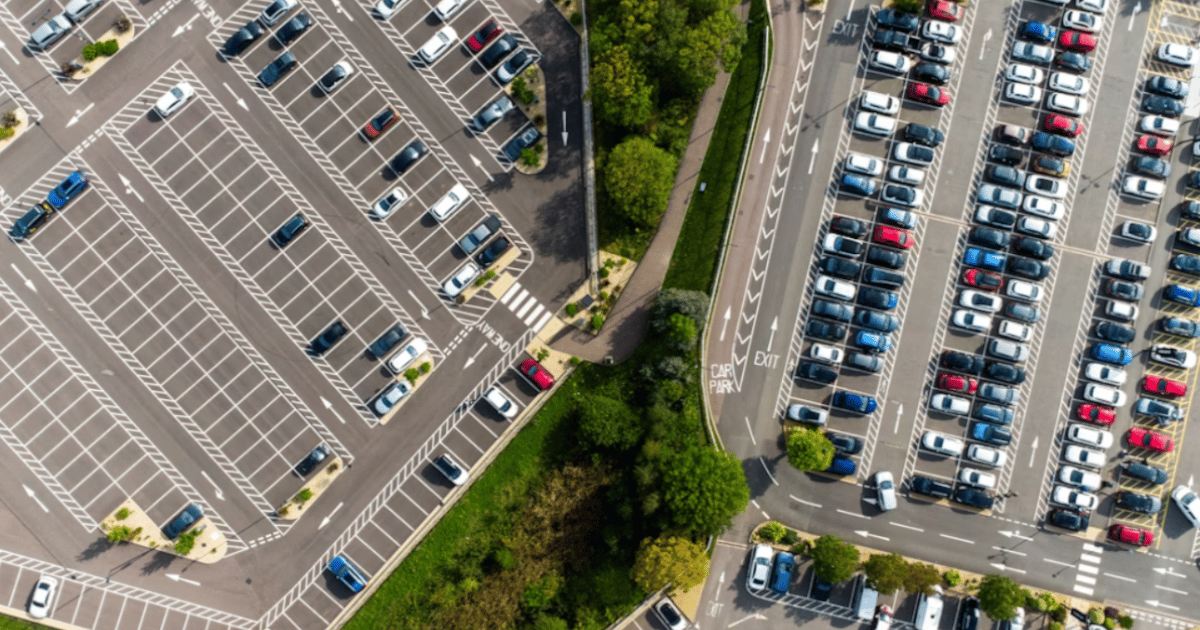
Cities across North America are rethinking long-standing zoning rules that dictate how much parking new buildings must include. These requirements spread after World War II, when car ownership surged and planners feared congestion and spillover parking. In response, many cities adopted suburban-style standards that required large amounts of parking for apartments, malls, offices, and factories—regardless of demand.
Over time, these rules created downsides. Parking—especially garages—is costly to build and drives up housing and construction prices, making infill and affordable projects harder to deliver. Large parking lots also push destinations farther apart, increasing traffic and reducing walkability, bike use, and transit viability.
In response, many cities and states are moving to eliminate or reduce parking minimums and allow developers to match parking supply more closely to demand. These reforms do not ban parking; they restore flexibility and help lower costs while supporting more walkable, mixed-use neighborhoods. Some jurisdictions go further by adopting parking maximums, capping the amount of parking allowed to prevent oversupply and encourage efficient land use.
Dozens of major cities have already enacted these reforms. For example, Minneapolis eliminated parking minimums citywide in 2021, applying the change to multifamily housing and mixed-use projects. Raleigh followed in 2022 with an overhaul that removed nearly all minimums and added maximums, making it one of the first Sunbelt cities to take such a comprehensive approach. In November 2023, Austin became the largest city in the South to abolish parking minimums.
More recently, Baltimore abolished its parking minimums in November 2025, freeing developers from fixed requirements for new construction or major renovations. Chicago also eliminated parking minimums near train stations and bus routes, with the new rules taking effect in September 2025.
States are joining the reform movement, and statewide policies are especially influential because they override fragmented local zoning and create consistent, transit-focused baselines for parking rules. California’s AB 2097 removes minimums for most developments within a half-mile of major transit stops. Oregon’s Climate-Friendly and Equitable Communities rules likewise restrict or abolish minimums near frequent transit and for equity-focused housing, prompting many cities to repeal parking mandates altogether.

Big Deals
Velvære secures $555M for luxury wellness community in Deer Valley.
Antares raises $96M to accelerate nuclear microreactor development.
Clipper Equity gets $450M of financing for Brooklyn apartments.
Morgan Stanley acquires MorningStar senior living portfolio for $305M.
Unlimited Industries raises $12M to advance AI-powered construction.
Naftali Group secures $465M loan for Miami Worldcenter tower.

Extra Reads
The U.S. grid storage industry set a wild goal for 2025 — and then crushed it.
How AI is helping urban planners design smarter, more livable cities
ACWA Power, Badeel, and SAPCO secure $8.2B for renewable energy.
LA developers pursue transit-oriented housing for tax incentives and growth.
America and China are fiercely competing in robotaxi innovation.
Data center energy demand is projected to nearly triple in ten years.
Norway starts building the world’s longest, deepest undersea road tunnel.
Waymo expands its autonomous robotaxi service to four new cities.
New York City moves forward with three new casino proposals.
Kansas City plans $2.6B affordable housing revitalization initiative.
Egypt advances high-speed rail project with $23B modernization plan.
Construction workers are benefiting from the AI data center boom.