- NextMetropolis
- Posts
- Grand Plans to Rebuild Gaza, Robotaxi Availability 2025 Wrapped, Seattle’s Transit Megaproject, Jeddah Tower Rising
Grand Plans to Rebuild Gaza, Robotaxi Availability 2025 Wrapped, Seattle’s Transit Megaproject, Jeddah Tower Rising

Editorial Staff
December 22, 2025


Our latest newsletter explores the major projects and trends shaping tomorrow’s cities.
You Should Know
China operates by far the world’s largest power grid. Between 2010 and 2024, its electricity generation grew by more than the rest of the world combined, and today China produces more than twice as much power as the U.S. According to The Wall Street Journal, Chinese data centers also pay less than half the electricity costs of their U.S. counterparts.
The bipartisan Housing for the 21st Century Act advanced out of the House Financial Services Committee, positioning it as the most important federal legislation in years aimed at addressing housing affordability by streamlining zoning, permitting, and regulatory barriers while offering a federal framework for local reform. The bill still needs a full House vote, Senate approval, and Trump’s signature to become law.
25% of the EU’s energy consumption in 2024 came from renewable sources, according to Eurostat.

Worth Watching
Why do some countries only have one big city?
NYC is dumping one billion oysters into its harbor—and it's working.
Why a mile-high skyscraper is almost impossible.

Top Stories
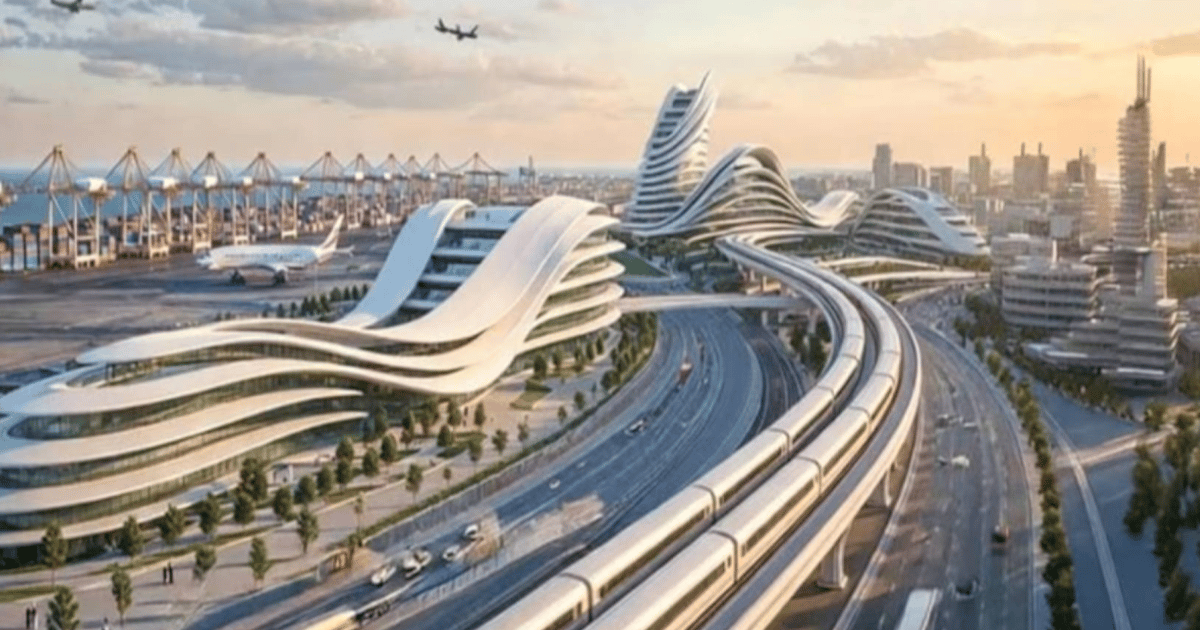
Gaza’s Reconstruction Plans: Practical Rebuild to Riviera Dream?
With a fragile cease-fire between Israel and Hamas now in place, attention is turning to what it would take to rebuild the Gaza Strip.
After two years of conflict, the scale of destruction is staggering. Roughly 80% of Gaza’s structures have been destroyed or damaged. The devastation has produced more than 60 million tons of rubble, much of it mixed with unexploded ordnance and the remains of an estimated 10,000 people still buried beneath collapsed buildings.
Several Gaza reconstruction proposals have emerged, none more ambitious than “Project Sunrise.” Led by Jared Kushner, President Trump’s son-in-law, and Middle East envoy Steve Witkoff, the plan envisions transforming Gaza into a high-tech coastal metropolis. As reported by The Wall Street Journal, the proposal pairs large-scale humanitarian reconstruction with long-term economic redevelopment.
Project Sunrise estimates total reconstruction costs of $112.1 billion over 10 years. Roughly $60 billion would be financed through grants and new debt. The U.S. would act as an “anchor,” committing to support 20% or more of this financing.
The plan divides Gaza into four reconstruction phases, starting in Rafah and Khan Younis before moving north to the central camps and, finally, Gaza City. Early phases focus on rubble clearance and the provision of temporary shelter and medical facilities, before permanent housing and infrastructure construction begins.
A centerpiece of the proposal is “New Rafah,” envisioned as Gaza’s future seat of governance. The master-planned city would be designed for more than 500,000 residents, with over 100,000 housing units, more than 200 schools, and over 75 medical facilities. Beginning in year 10, the plan also proposes monetizing 70% of Gaza’s coastline, projecting more than $55 billion in long-term investment returns from beachfront development and tourism.
The proposal makes clear, however, that no reconstruction can proceed unless Hamas fully demilitarizes and dismantles all weapons and tunnel networks.
By contrast, a reconstruction plan backed by Egypt and endorsed by several Arab states emphasizes continuity rather than reinvention. This approach prioritizes rebuilding Gaza with its two million residents remaining in place, focusing on quickly restoring housing, utilities, and transport. It anchors logistics and trade flows through Egypt’s Sinai infrastructure, including the El-Arish logistics hub. While this model aims to stabilize daily life and preserve Gaza’s social fabric, it faces challenges around funding scale, governance, and long-term security arrangements.
A third proposal, the 20-Point Peace & Reconstruction Framework, prioritizes stabilization over reinvention, linking reconstruction to a broader political settlement. Developed as part of a U.S.-led initiative and endorsed internationally, it ties the rebuilding of Gaza to cease-fire enforcement, security reform, and transitional governance. The framework calls for international oversight, temporary governing bodies, and phased rebuilding benchmarks tied to stability and demilitarization.

Robotaxi Availability: 2025 Wrapped
In 2025, the robotaxi industry reached a critical inflection point, transitioning from experimental pilots to scaled urban operations. Technical autonomy is no longer the primary hurdle; instead, leading players have proven that fully driverless operations are viable. The strategic focus has now shifted toward operational reliability at scale—specifically incident response, remote assistance, fleet uptime, and seamless interaction with law enforcement.
As the industry consolidates, clear leaders are emerging. Waymo and Baidu Apollo Go dominate the market, each logging hundreds of thousands of weekly rides with fleets exceeding 2,000 vehicles. Rather than countrywide launches, expansion is happening one metro at a time. Operators are prioritizing cities with favorable weather, wide roads, predictable traffic patterns, and supportive regulators. This has created an elite group of “robotaxi-ready” hubs, while other regions remain on hold pending lower costs and more mature regulatory frameworks.
Here is the current operational landscape for the major players:
Waymo – Offers fully autonomous, driverless commercial services in Phoenix, the San Francisco Bay Area, Los Angeles, Austin, Atlanta (via Uber), Miami, Dallas, Houston, San Antonio, and Orlando. Nashville (via Lyft) and London are scheduled for early 2026. Waymo is also conducting testing or limited pilots in New York City, Philadelphia, Pittsburgh, Baltimore, St. Louis, Minneapolis, Tampa, and New Orleans.
Baidu Apollo Go – Provides fully driverless services across major Chinese hubs, including Wuhan, Beijing, Shanghai, Shenzhen, Guangzhou, and Chongqing, as well as Abu Dhabi (via AutoGo). Testing is currently underway in Dubai and Hong Kong.
Pony.ai – Operates fully driverless services in China’s four "Tier-1" cities: Beijing, Shanghai, Guangzhou, and Shenzhen.
WeRide – Provides fully autonomous rides in Guangzhou and Abu Dhabi (via Uber). Active testing is ongoing in Beijing, Nanjing, and Dubai.
Tesla – Does not yet offer a public, fully autonomous commercial service (i.e., paid rides without a human safety monitor). Tesla is currently validating its fleet with human supervisors in Austin and the San Francisco Bay Area, with stated plans to expand testing to Las Vegas, Phoenix, Dallas, Houston, and Miami.
Zoox (Amazon) – Operates a fully driverless service for the public around the Las Vegas Strip and parts of San Francisco (via a waitlist). It is conducting broader testing in Seattle, Austin, Miami, and the wider Bay Area.

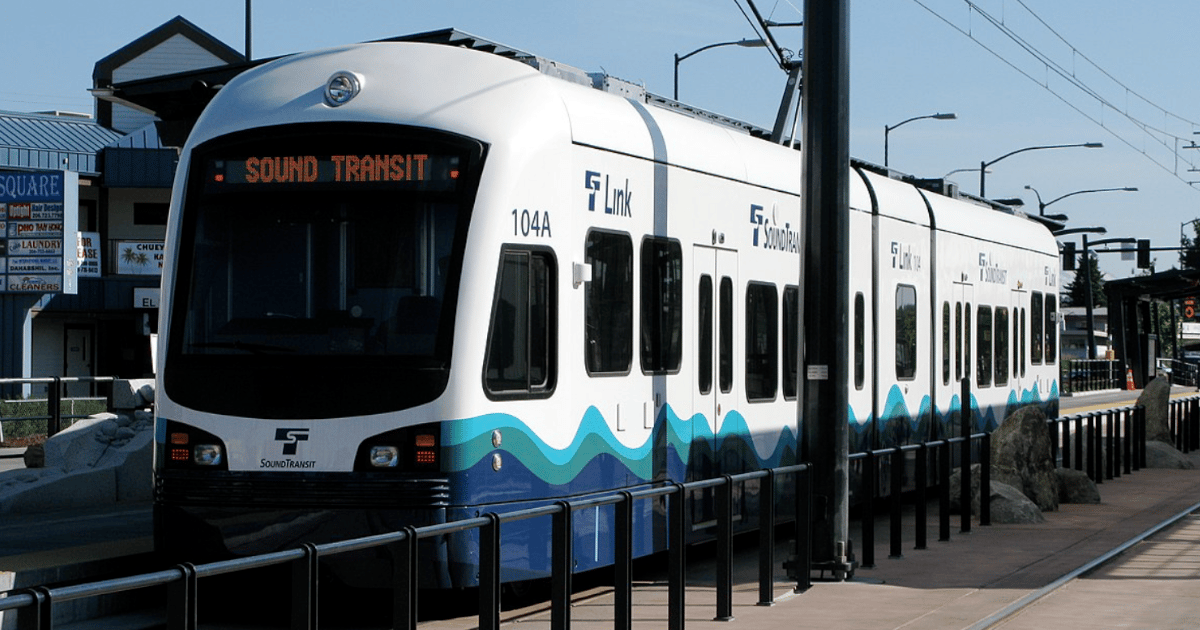
There’s a Transit Megaproject in the Seattle Area That’s Worth Watching
Most people outside Washington state have never heard of Sound Transit 3 (ST3). But within urban development circles, it has become one of the most closely watched transit programs in the country, a real-world case study in megaproject governance.
ST3 is the expansion plan for public transit in the Puget Sound region and one of the most ambitious transit investments ever approved in the U.S. Originally projected to cost over $50 billion, the program links Seattle, Tacoma, Bellevue, Redmond, and dozens of other cities into a single regional network. Voters approved the plan in 2016, authorizing a 30-year buildout that will create roughly 116 miles of light rail.
Several elements of ST3 rival standalone transit systems elsewhere in the country. The Everett and Tacoma Dome extensions alone are longer than the entire light-rail networks in many mid-sized U.S. cities.
Much of the system’s cost and risk stems from its complexity, especially in dense urban areas where tunneled stations can cost $300–500 million each. The West Seattle–Ballard Link highlights these challenges, requiring deep-bore tunneling beneath waterways and crowded neighborhoods on a scale comparable to subway construction in New York or San Francisco.
The most pressing challenge, however, has been cost escalation. Earlier this year, Sound Transit reported significant cost growth across ST3 projects, pushing projected costs up by roughly $30 billion. Officials have scrambled to close the gap, including briefly considering the elimination of a second downtown Seattle transit tunnel as a last-resort cost-cutting measure. That idea was rejected last week, sharpening regional tensions over priorities and cost-sharing as Sound Transit prepares to release an updated system plan in 2026.
ST3 also underscores the challenge of delivering a single megaproject across multiple municipalities within a fragmented political system. The West Seattle–Ballard Link illustrates this clearly: repeated routing changes, shaped by neighborhood-level political pressures, have increased costs and delays. As a result, ST3 is frequently cited in debates over whether voter-approved infrastructure programs require stronger centralized decision-making.
Finally, ST3 is a widely referenced example of the “infrastructure–zoning gap,” in which major transit investments proceed without corresponding land-use reform. The Issaquah Link underscores this risk: Sound Transit can build rail, but cities along the corridor control zoning and limit housing density, weakening ridership and the ST3’s economic returns. For planners, ST3 is a cautionary case showing that transit projects can fall short when land-use policy fails to align with infrastructure spending.

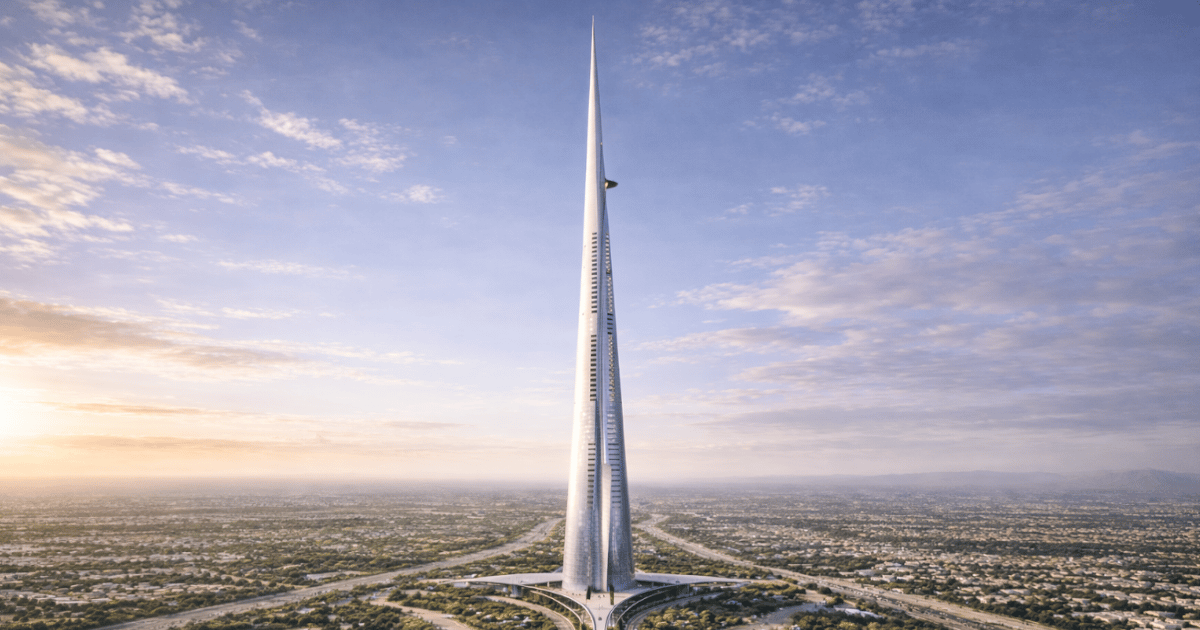
Jeddah Tower Races to Become the World’s Tallest Building
Construction of Saudi Arabia’s Jeddah Tower is advancing at a remarkable pace. When completed, it will become the first building in history to rise more than one kilometer into the sky, fundamentally redefining the limits of vertical construction. At over 1,000 meters tall, the tower will surpass Dubai’s Burj Khalifa by roughly 172 to 180 meters, securing its position as the world’s tallest building.
Since construction resumed in January 2025, progress has accelerated rapidly. The structure has already reached nearly 80 floors, with crews adding a new floor every three to four days. Building to a height of one kilometer introduces challenges far beyond those of conventional skyscrapers, from managing extreme wind loads and material logistics to maintaining precision across unprecedented vertical distances. For a megatall tower of this scale, the pace of construction is exceptional.
Designed by Adrian Smith, who also co-designed the Burj Khalifa, Jeddah Tower integrates advanced structural and environmental systems engineered to perform at extreme heights and in harsh desert conditions. High-speed elevators capable of traveling at more than 10 meters per second will move occupants efficiently through a structure expected to exceed 160 floors.
At its base, the tower is supported by a massive hybrid piled-raft foundation. This system features a five-meter-thick concrete mat spanning more than 7,500 square meters, anchored by 270 deep bored piles extending up to 110 meters into limestone and coral rock. The foundation provides the stability required for a structure of unprecedented height and weight.
Jeddah Tower will be fully mixed-use, housing a Four Seasons Hotel, luxury residences, serviced apartments, and premium office space. A sky-high observation deck will offer panoramic views of Jeddah and the Red Sea, highlighting the engineering precision required to make such elevated spaces both safe and accessible.
The project’s timeline has not been straightforward. Originally known as the Kingdom Tower, construction was halted for several years before work resumed in 2025. With completion now targeted for 2028 and momentum firmly restored, Jeddah Tower is once again advancing toward its place in architectural history.

Big Deals
Related Ross secures $772M, Florida's largest construction loan ever, for West Palm Beach towers.
Trump Media & Technology Group announces $6B merger with fusion energy firm TAE Technologies.
Nuclear startup Last Energy bags $100M to power AI data centers with mini reactors.
WSP acquires TRC for $3.3B to become the largest engineering and design firm in the U.S.
LaTerra Capital and Respark Residential buy Chicago apartment properties for $455M.
Extell secures $655M, New York City's largest construction loan of the year, for 655 Madison Ave.
Radiant Nuclear raises over $300M in Series D funding to mass-produce portable nuclear reactors.

Extra Reads
Binghatti unveils $8.2B Mercedes-Benz branded city in Dubai.
Berlin's urban redevelopment plans aim for greener, pedestrian-friendly spaces.
Waymo in talks to raise billions at over $100B valuation.
EU launches first affordable housing plan to address housing crisis.
Mall of the Emirates announces $1.4B expansion with 100 stores.
UK approves Morecambe Offshore Wind Farm, boosting green energy transition.
Archer Aviation plans air taxi trials in U.S. cities under the White House’s eVTOL Integration Pilot Program.
Queens NYC is transforming with an $8.1B casino and stadium.
TotalEnergies signs 21-year renewable power agreement with Google.
Saudi Arabia launches its largest battery energy storage system.
In Broward County, Florida, digital twins, and AI help plan resilient infrastructure.
China is building a 76-mile rail tunnel, becoming the longest tunnel in the world.