- NextMetropolis
- Posts
- College Closures Spur Redevelopment, Atlanta's Beltline Pays Off Big, New Grid Data Blames Data Centers, An Unlikely Solar Leader
College Closures Spur Redevelopment, Atlanta's Beltline Pays Off Big, New Grid Data Blames Data Centers, An Unlikely Solar Leader

Editorial Staff
May 18, 2026


This week’s briefing covers the urban development and energy trends shaping our future.
You Should Know
U.S. multifamily construction continues to struggle, with apartment starts hitting a 15-year low in Q1 2026 — just 55,000 units nationwide, down 73% from the 2022 peak, according to Apartments.com and CoStar.
The European Union's electricity grid is the largest interconnected power system in the world, synchronously linking 25 countries.
A transformer shortage is choking grid expansion — with wait times for large, high-capacity units stretching up to four years.
These are the largest private landowners in the USA. Stan Kroenke tops the list, controlling an estimated 2.7 million acres, which is larger than the entire state of Delaware.

Worth Watching
The simple genius of NYC’s water supply system.
Maeslantkering Barrier: Inside the wall saving Europe from a $500B flood.
Which power plant does my electricity come from?


Cabrini University, a former private university in Pennsylvania, closed in 2024.
Colleges Closures Are Piling Up. What Happens to All That Land?
American higher education is contracting, and the campuses being left behind may represent one of the more consequential urban development opportunities in a generation.
Since 2020, at least 49 nonprofit colleges have closed or announced closures. A Federal Reserve Bank of Philadelphia report found that under a worst-case enrollment scenario, up to 80 institutions could shutter in a single year.
The forces driving this are structural: the number of 18-year-olds in America is projected to fall 13 percent between 2026 and 2041, tuition discount rates at private nonprofits hit a record 51 percent in 2022, and operating costs have outpaced inflation for years.
The schools most at risk are small, tuition-dependent institutions in regions with shrinking youth populations — often the same ones that have served as economic anchors for their communities for over a century.
When they close, they leave behind something cities rarely get: large, contiguous, infrastructure-rich parcels in established neighborhoods. Campuses typically include road networks, utility systems, convertible buildings, and green space in locations that would take a decade of painful parcel assembly to replicate. In the Northeast and Midwest, where closures are most concentrated, many sites sit adjacent to downtown cores, transit corridors, and hospital districts.
Four redevelopment models are emerging. The first is the public-private reset, where a government entity steps in as intermediary. When the College of Saint Rose collapsed, a county land authority distributed assets across multiple parties: Hudson Valley Community College took the arts center, UAlbany converted dorms into student housing, and residential properties were returned to the local homeownership market.
The second is the mixed-use district, where a master developer reprograms the entire campus. The former Colorado Heights University site in Denver is being rebuilt as a 1,400-unit neighborhood with affordable housing, a renovated 1,000-seat theater, and a community resilience hub backed by a $20 million EPA grant.
The third is single-use conversion, the fastest path to closing. Newbury College's Brookline campus sold for $34 million and reopened in December 2024 as a 159-residence senior living community, with an 1896 mansion preserved as a shared amenity.
The fourth is institutional absorption, where a nearby university acquires the campus outright, preserving neighborhood character and bypassing rezoning entirely. When Mount Ida College shut down in 2018, UMass Amherst acquired its 74-acre Newton campus for $75 million and converted it into a Greater Boston satellite facility without a single entitlement proceeding.
Still, the redevelopment challenges tied to former campuses are substantial: institutional zoning blocks most commercial and residential uses by default, historic designations drive up renovation costs, and distressed college balance sheets add due diligence complexity that standard transactions don't require. Developers who move fastest treat community engagement as the first phase of the project, not the last.

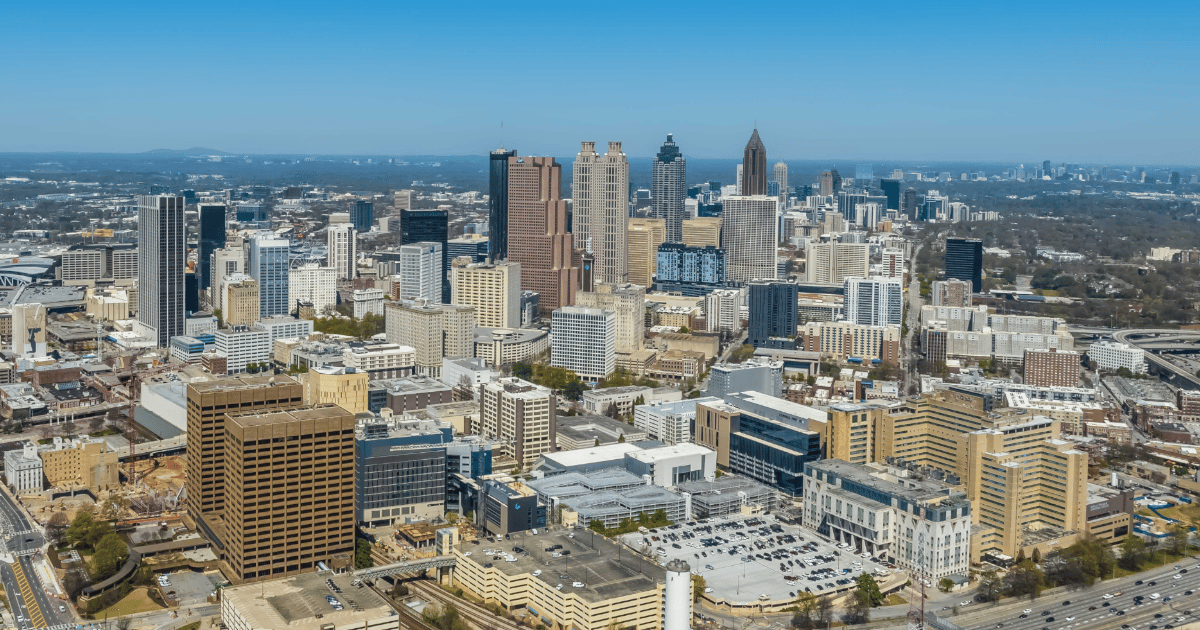
The Atlanta Beltline: How a Trail Became a Model for Urban Redevelopment
What began as a graduate student's 1999 thesis at Georgia Tech has become one of the most closely watched urban redevelopment projects in the country. The Atlanta Beltline — a 22-mile loop of trails, parks, and planned transit built along former railroad corridors that encircle Atlanta's urban core — is now in the final stretch of a decades-long buildout.
The concept originated with Ryan Gravel, who proposed converting the ring of abandoned rail lines into a connected transit and public space system linking Atlanta's neighborhoods. The idea gained traction through the early 2000s, and in 2005 the Atlanta City Council adopted the Beltline Redevelopment Plan and established a Tax Allocation District (TAD) — a financing mechanism that directs property tax revenue growth from rising land values back into the corridor's development. Atlanta Beltline Inc. was formed in 2006 as the official implementation agency.
The full buildout calls for 33 miles of multi-use paths, including spur trails, 1,300 acres of green space across 13 parks, and a light rail streetcar system connecting 45 neighborhoods. The project is on track for completion by 2030.
As of mid-2024, nearly 11 miles of mainline trail and 10 miles of connector trails were complete. The corridor has also remediated approximately 156 acres of contaminated soil from its former industrial land, removing toxins including arsenic and lead at a cost of roughly $20 million.
Funding for the project has come from multiple sources. Since inception, the Beltline has deployed $941 million through TAD revenue, federal and state grants, and philanthropic contributions.
That public investment has drawn a significant private response. A 2025 economic impact analysis prepared by Econsult Solutions Inc. found that the Beltline has catalyzed $14.2 billion in cumulative private investment with 318 completed development projects and 93 more in the pipeline. Private development has consistently followed new trail openings by 12 to 24 months.
The broader economic picture is substantial. Beltline-related activity sustained more than 91,000 jobs and generated an estimated $23 billion in annual economic output for Atlanta in 2025. Major employers including BlackRock, Mailchimp, and OneTrust have established operations along the corridor. The Beltline also attracted 2.5 million visits in 2025, with 60 percent coming from Atlanta residents, and visitor spending reached an estimated $52 million.
On the housing front, the Beltline has delivered or has under development 4,425 affordable units against a goal of 5,600 by 2030, while acquiring 94 acres of land to support equitable development. From 2010 to 2023, the Beltline Planning Area gained approximately 26,000 residents — a reversal of the population decline Atlanta experienced in prior decades.

Are AI Data Centers Behind Your Rising Electric Bill? New Data Says Yes
The debate over whether AI data centers are driving up household electricity bills is intensifying, and new data is sharpening the picture. A report from Monitoring Analytics finds that wholesale electricity prices across America's largest power grid surged nearly 76% year over year, attributing the spike largely to soaring demand from AI data centers.
PJM Interconnection, the largest electric grid operator in North America, covers 67 million people across 13 states — including Delaware, New Jersey, Pennsylvania, Virginia, and Ohio — representing nearly 20% of the U.S. population.
Monitoring Analytics, an independent market monitor for PJM, released detailed findings showing that total wholesale power costs in the PJM region rose to $137 per megawatt-hour in the first quarter of 2026, up from $78 during the same period in 2025.
The report does not mince words about the cause. Data center load growth is identified as the primary driver behind tightening supply and demand conditions and the resulting price spike. Capacity costs alone surged 398% in the first quarter, and data center load included in PJM's last two capacity auctions translated into a $13 billion cost increase for customers across the grid.
PJM officials acknowledged the rising prices as an accurate reflection of tightening wholesale market conditions, while noting that PJM is working with states and member companies on multiple fronts, including extending market caps and authorizing new transmission expansion projects.
Yet the relationship between data centers and electricity bills is more complicated than the PJM numbers suggest. Northern Virginia hosts the world's highest concentration of data centers, handling roughly 70% of global internet traffic, with data centers consuming 25% of the state's total electricity. Despite that load, Virginia's average residential rate sits at 15.94 cents per kilowatt-hour — below the national average of 17.24 cents. Dominion Energy data indicates recent rate adjustments were driven by inflationary pressures and fuel costs, not data center demand.
A separate University of Minnesota study reached a similar conclusion: states with the greatest demand spikes often saw lower prices, as large customers spread fixed grid costs across more kilowatt-hours.
What matters most, researchers argue, is not whether data centers are present but how fast they arrive. The Rutgers New Jersey State Policy Lab warns that when data centers come online faster than utilities can plan for them, sudden grid congestion forces utilities to buy expensive last-resort power on the spot market — temporarily driving up costs for everyone. Keeping rates stable depends heavily on proactive utility planning and robust regulatory frameworks.


Guess Which Country Is a Leader in the Transition to Solar
Few analysts would have predicted that Cuba — a sanctions-strangled island of 10 million people — would emerge as one of the world's unlikely leaders in the solar transition. And yet, here we are.
In just 12 months, Cuba has tripled its solar power share from 5.8% to over 20% of total electricity generation. To put that in perspective, solar alone produced under 9% of total U.S. electrical generation in 2025. Between early 2025 and early 2026, Cuba connected 49 new solar parks to its national grid, adding more than 1,000 megawatts of capacity.
Cuba's solar boom was born from a fuel blockade. President Donald Trump's January 2026 executive order threatened tariffs on any country supplying oil to Cuba, which cut fuel imports by roughly 90% and contributed to nationwide outages.
China stepped in — not with oil, but with solar panels. Chinese solar exports to Cuba surged from $3 million in 2023 to $117 million in 2025, a nearly 40-fold increase in two years. Beijing has committed to building 92 solar parks across the island by 2028, targeting a combined capacity of approximately 2,000 megawatts — roughly equivalent to Cuba's entire current fossil fuel generation capacity. In other words, Cuba is attempting to replicate its existing electricity base from scratch, using solar, in roughly three years.
How Cuba is financing all of this is less clear than the construction pace suggests. The financing operates through a combination of energy-backed loans and outright donations structured to bypass U.S. sanctions. For example, China has donated around 70 tons of power generator parts and pledged to install 10,000 photovoltaic systems in isolated homes and critical facilities such as maternity wards and clinics.
But Cuba's state is effectively insolvent, and most Cuban consumers cannot afford home solar installations. The numbers behind a full transition are sobering. According to an April 2026 analysis by the Transition Security Project, reaching 93% renewable electricity would cost $8 billion; a fully renewable system would require $19 billion.
Cuba would need to demonstrate it can repay loans to attract development financing — a process of establishing creditworthiness that the country arguably doesn't have time for. And China is unlikely to offer a blank check indefinitely.
Despite the financial challenges, Cuba is pledging to generate about a quarter of its electricity from renewable sources by 2030. Whether the island can sustain that pace remains the central question of one of the most closely watched experiments in the energy world.

Big Deals
Fervo Energy raises $1.9B in its IPO to advance geothermal power.
Core Spaces secures $1.6B for student housing development.
AT&T closes a $400M construction loan for its new Texas headquarters.
Drawbridge Realty acquires Nashville's Bridgestone Tower for $255M.
VoltaGrid secures $1B to deploy "behind-the-meter" power generation solutions.
Nscale lands $790M in financing for a data center project in Norway.
Mubadala commits $325M to the UK's Hornsea 3 offshore wind farm.
Blackstone's data center REIT raises $1.75B in its market debut.
Sunraycer Renewables closes a $901M project financing facility.
Cowboy Space Corporation obtains $275M to build and launch orbital data centers.
Indian Uber rival Rapido raises $240M.

Extra Reads
Paris' third-tallest skyscraper tops out.
A $1.7B Sphere venue is coming to Abu Dhabi's Yas Island.
Amazon launches "Amazon Now" 30-minute delivery nationwide.
Jakarta’s remarkable urban transit transformation.
Mingyang wins approval for a colossal $15B wind and hydrogen project.
Blackstone launches a lending platform to finance 50,000 homes.
India is rapidly scaling up renewable energy, but there's a storage shortage.
Retal lands an $830M residential Sultan Haitham City contract in Oman.
Taiwan opens the world's longest single-mast cable-stayed bridge.
China powers up first green energy project with direct link to data center.
Pakistan eyes high-rise housing push to curb urban sprawl.
Nuro autonomous driving opens its first European hub in Munich.
Washington passes first statewide scissor stair reform.
The $16B Gateway project prepares to bore a tunnel to NYC.